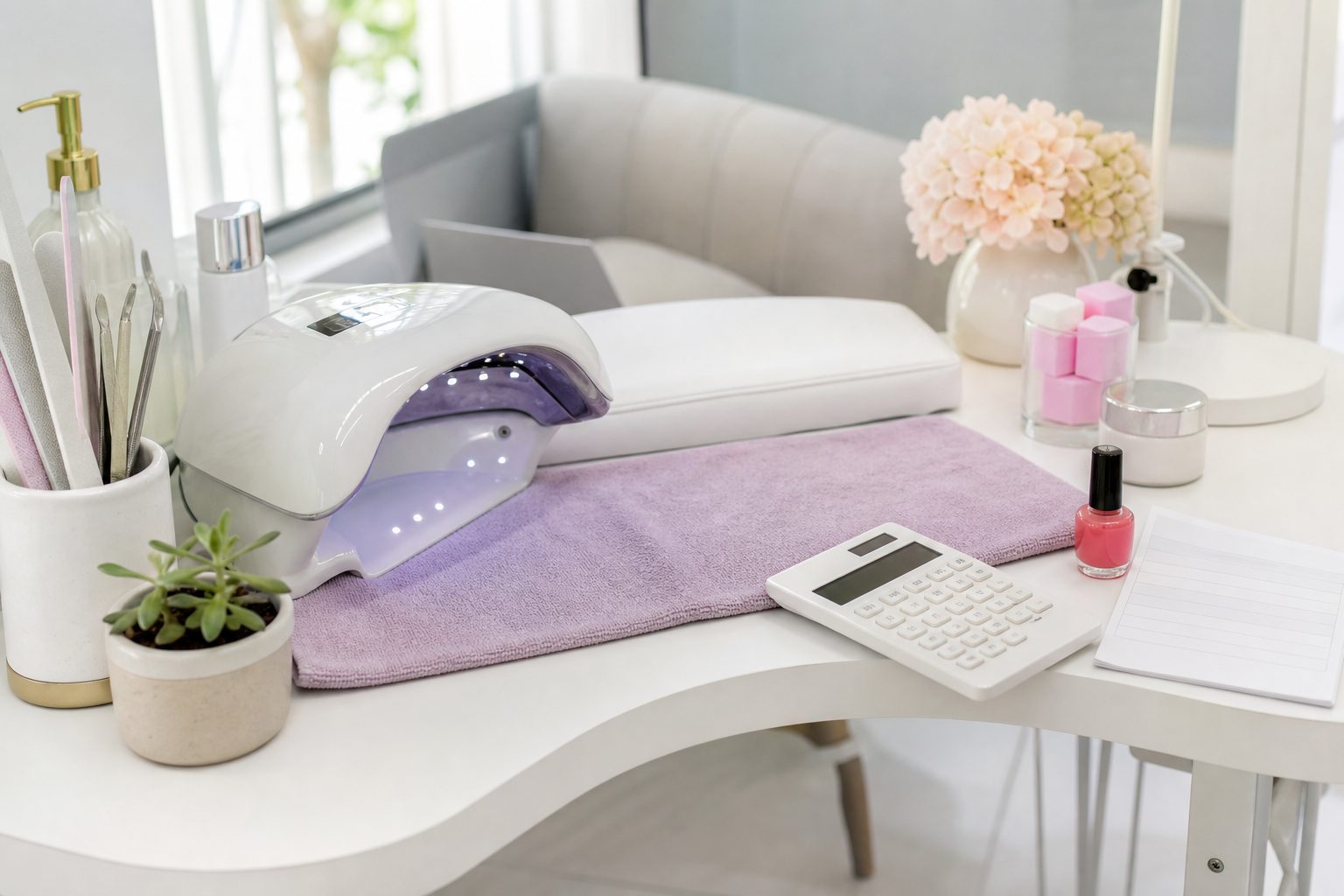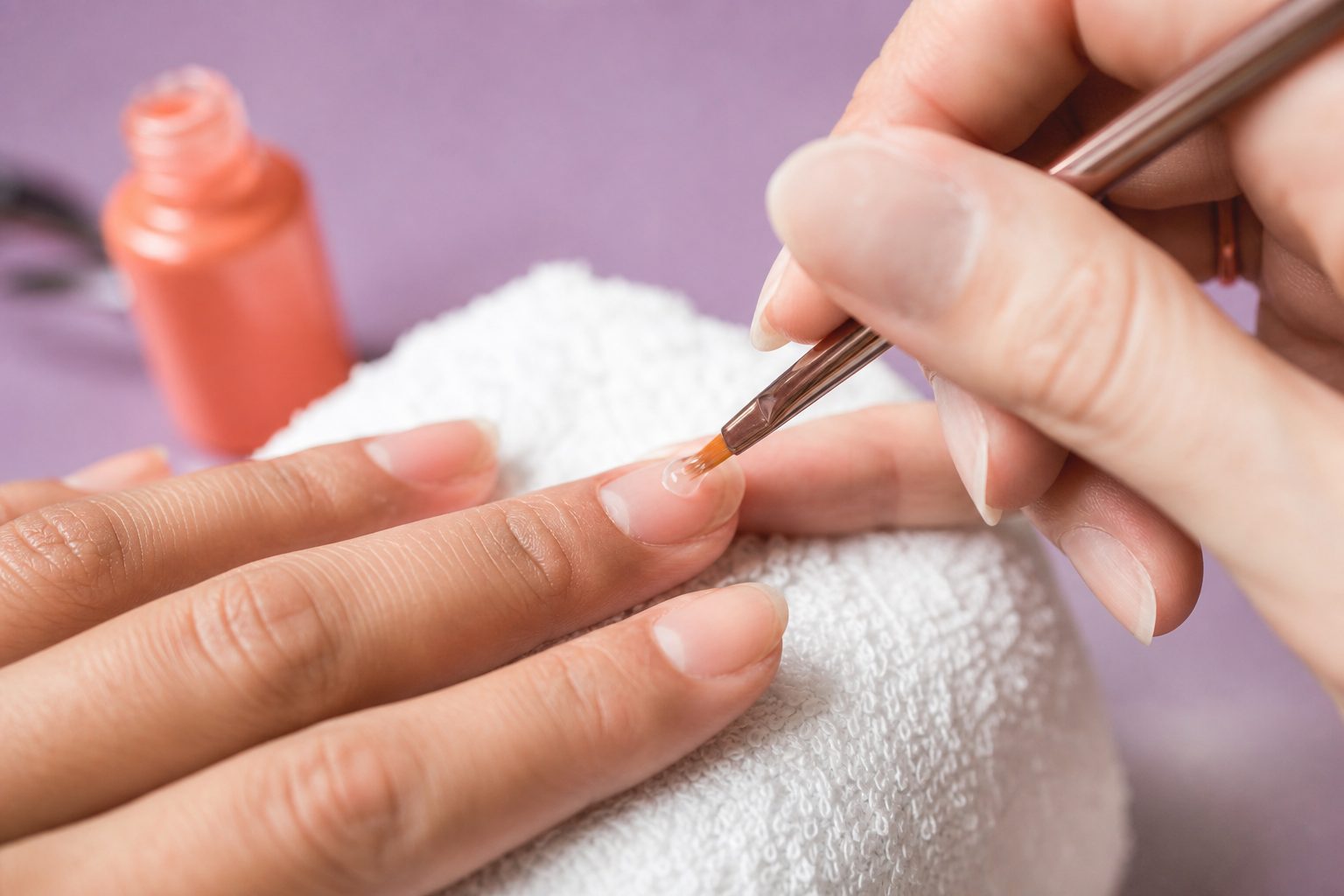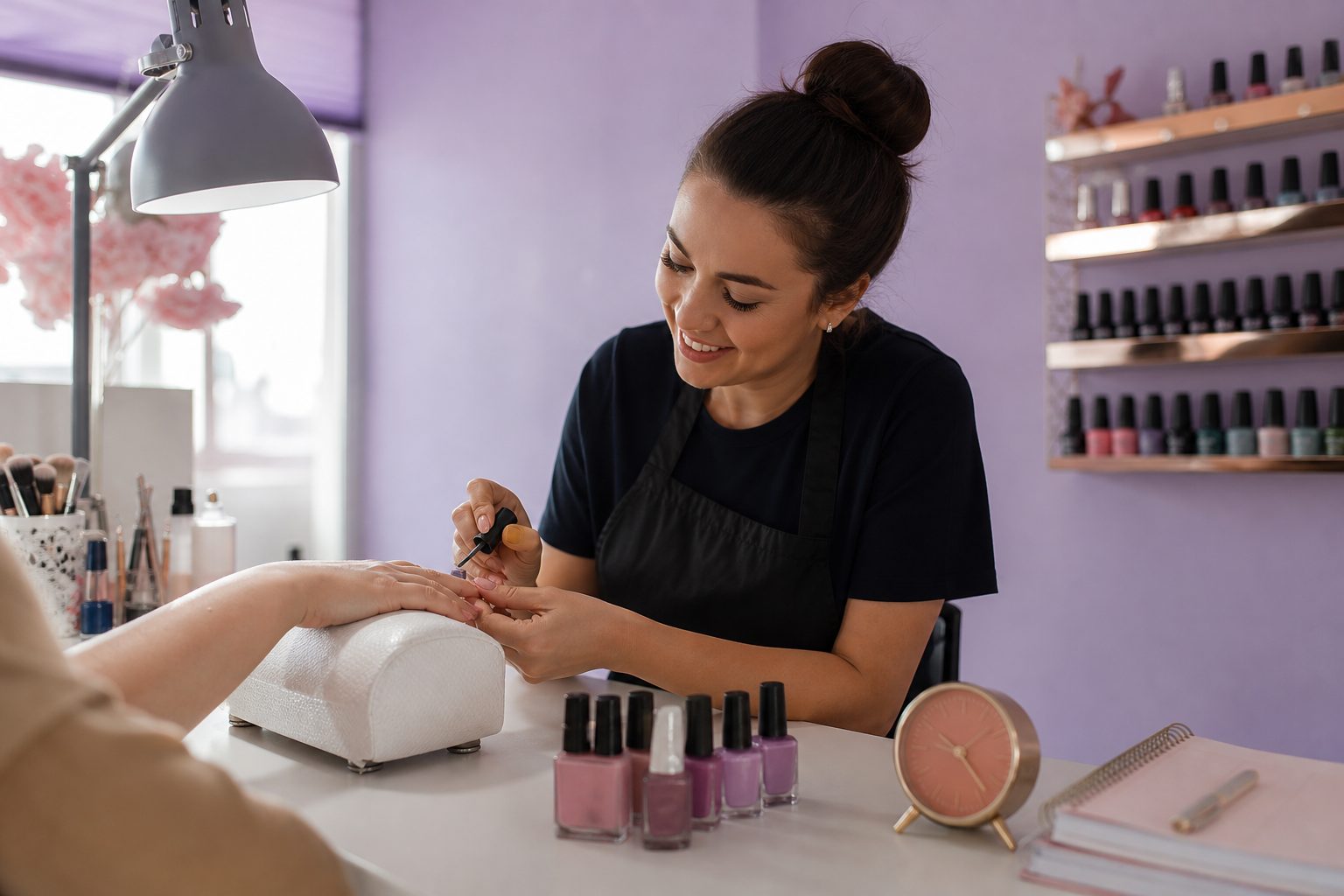
For a solo tech, a full set with real art needs a block of two hours and fifteen minutes to three hours, and the honest number for most people is closer to the top of that range than they want to admit. A two hour block for a full set with art is the single most common booking error on a solo floor, and it is why so many days end forty minutes behind.
The reason is not hand speed. It is that the block usually gets sized from the parts you notice, which are prep, application and art, and never from the parts you do not notice, which are the consult, the cure waits, the cleanup and the turnaround between clients. Those unmeasured pieces add up to twenty five or thirty minutes on a typical set, and they are the minutes that cascade.
Below is a phase by phase breakdown you can time against your own work, plus a way to size the art portion by tier and a method for setting each client's block from her own history instead of from a generic menu time.
Timing the phases: consult, prep, application, art, cure, cleanup
Sit with a timer for three sets and record each phase separately. Most techs are surprised by two of the six. Here is a representative breakdown for a soft gel or acrylic full set on a returning client, with moderate art on all ten.
| Phase | What is happening | Typical minutes |
|---|---|---|
| Greeting and consult | Coat, water, hand wash, discussing what she wants, pulling reference photos, shape and length agreement | 8 to 12 |
| Removal, if prior set | Break the seal, soak or file down, clean the plate | 15 to 30 |
| Prep | Cuticle work, sizing, dehydrate, bond | 15 to 20 |
| Application and structure | Tips or forms, product build, apex, cure or set | 30 to 45 |
| Shaping and refine | File to shape, sidewalls, surface, dust off | 12 to 18 |
| Art | Base, design work, detail, cure between layers | 10 to 60 |
| Top coat and finish | Cap, cure, cleanse, oil, hand massage | 8 to 12 |
| Checkout and rebook | Payment, photos, next appointment, aftercare | 5 to 8 |
Add the low ends without removal and you get about 88 minutes. Add the high ends with a removal and you are past three hours. That spread is the entire problem with a single menu time.
Keep reading: How much should I charge for a gel manicure when my booth rent goes up?
Where the minutes actually disappear on a solo floor
Working alone means every non technical task is also yours. Nobody else answers the phone, greets the walk in, takes the deposit or wipes the station. Those interruptions are not in your menu time, but they are in your day.
The four biggest leaks, in rough order:
- The consult that turns into a browse. She scrolls for a design while you wait with a file in your hand. Ten minutes gone before you have touched a nail.
- Phone and door. Every inbound call during a service costs you the call plus the reset time to get back into the work. Two calls in a set is realistic.
- Design changes mid set. She likes it on three fingers and wants something else on the ring finger. That is a new decision, a new color pull and a new cure cycle.
- Photos. Good photos are marketing, and they take five to eight minutes with lighting and repositioning. Charge yourself the time honestly.
None of these are fixable by working faster. They are fixable by putting them into the block or by moving them out of the appointment entirely. Sending a design confirmation the night before removes most of the consult browse. Letting calls go to voicemail with a same day callback window removes the interruption.
Art complexity tiers and what each one adds to the block
Stop treating art as one line item. Tier it, publish the tiers, and add the time and the price by tier. A workable four tier system:
| Tier | Examples | Added minutes | Suggested add on |
|---|---|---|---|
| 1: Accent | Two accent nails, single color, chrome or cat eye, simple French | 10 to 15 | $10 to $15 |
| 2: Simple design | Freehand swirls, dots, marble on four nails, glitter fade | 20 to 30 | $20 to $30 |
| 3: Detailed | Ten nail freehand, ombre plus detail, foils and layered elements, hand painted florals | 35 to 50 | $40 to $60 |
| 4: 3D and encapsulation | 3D sculpted elements, charms, encapsulated design, character work | 50 to 90 | $70 and up |
The dollar figures are illustrative and should be rebuilt from your own hourly target. If you want $60 an hour of chair time, a tier 3 design adding 45 minutes needs to add $45 to the ticket at minimum, before you account for the fact that art also increases your product cost and your redo risk.
The operational benefit of tiers is bigger than the pricing benefit. When a client books online and picks tier 2, your calendar can hold the right block automatically instead of you guessing from a one line note.
Keep reading: What does my state board actually require for sanitizing implements between clients?
Turnaround and sanitation time nobody puts on the calendar
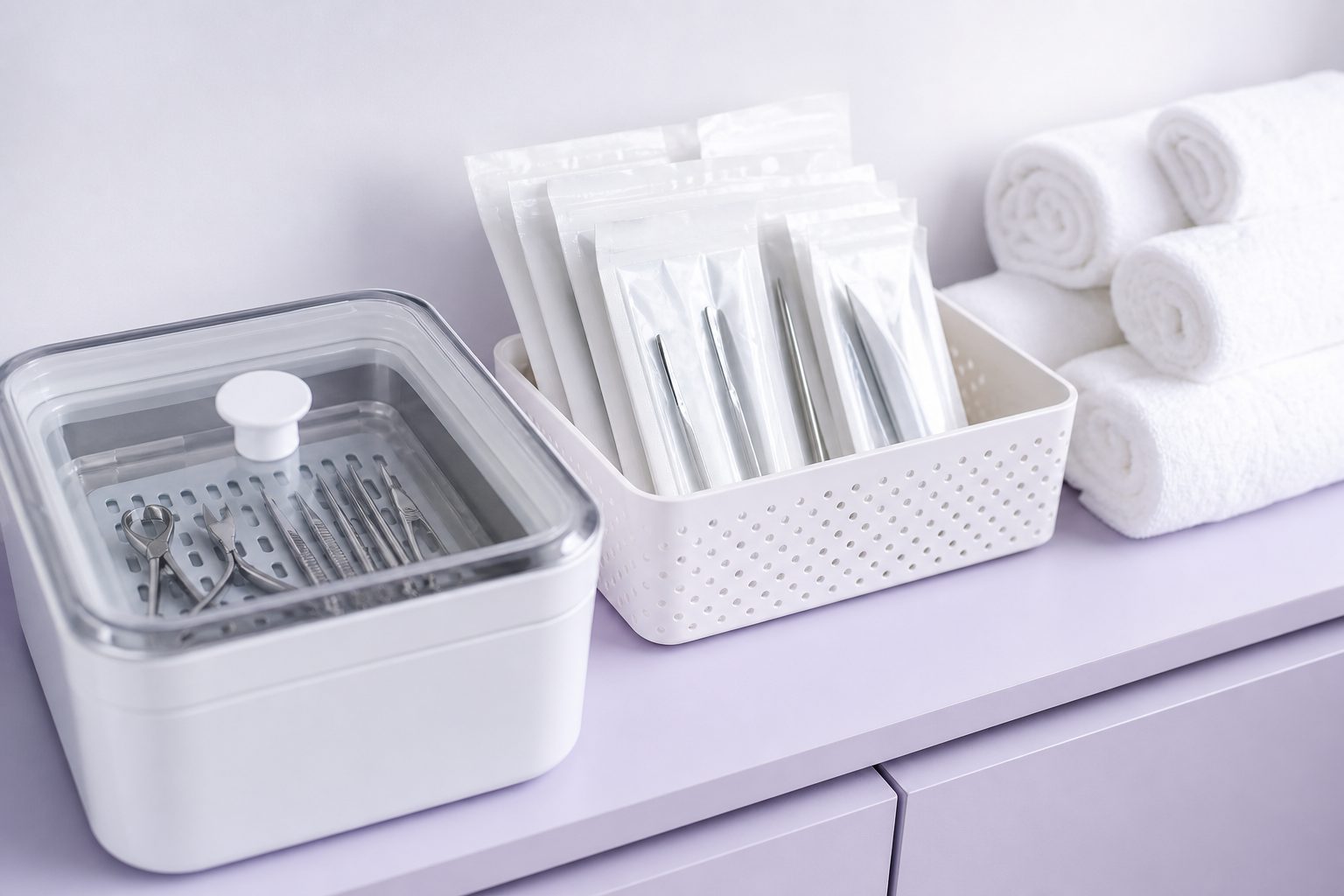
Between clients you have real work to do, and none of it is billable. Wipe and disinfect the station surface. Bag and remove the implements you used for the required contact time in disinfectant. Set out a clean set. Change the towel. Empty dust. Wash your hands. Reset your color tray.
Do it properly and it is eight to twelve minutes. Your state board sets the disinfectant contact time and the implement handling rules, and those are not negotiable in an inspection. Check your own board, because the specifics differ by state.
Now do the arithmetic on a five client day. Twelve minutes of turnaround per client is an hour. If your calendar has zero minutes of gap between appointments, that hour comes out of your services, which means you are late by lunchtime and you stay late by the same amount every single day.
Buffer blocks, late arrivals and the cost of a cascading day
A cascade is what happens when one overrun has nowhere to go. Client one runs eighteen minutes over. Client two arrives on time and waits. You start her rushed, you skip the consult, and something goes wrong on the ring finger that costs you ten minutes to fix. By client four you are fifty minutes down and you are choosing between a bad set and a bad reputation.
Two structural fixes work for solo techs:
- Put the turnaround in the block. If a full set with tier 2 art takes you 135 minutes of work, book it as 150. The buffer is not padding, it is the sanitation and reset you are legally required to do anyway.
- Keep one absorber per day. A thirty minute gap around the middle of the day, ideally at the point where you would otherwise eat standing up. It is a shock absorber. If the day runs clean, you get a break. If it does not, you get back on schedule for free.
On late arrivals, decide the rule once and write it into your booking confirmation. A common structure: more than fifteen minutes late and the service is shortened to what fits, more than twenty five and it is rebooked with the deposit applied to the next visit. The point is not to punish anyone. It is that a late client should not spend the next client's time.
See how PolishBook handles this for nail studios
Using recorded wear time and past service length to set the next block
Here is the part that turns all of this from a spreadsheet exercise into a working system. Menu times are averages. Your clients are not averages. One woman's full set with tier 2 art genuinely takes you 130 minutes, and another's takes 175 because she has a challenging nail shape, she changes her mind twice, and she wants photos of every angle.
You already know this about each of them. It just lives in your head instead of in your calendar.
The fix is to record two numbers at every visit:
- Actual service length. Time in the chair, start to checkout, not the block you booked.
- Wear time. How long the last set held before she came back, and what failed if anything did. Free edge chip at two weeks and cuticle lift at three weeks tell you different things.
After three visits you have a personal block length for that client that is more accurate than any menu number. After six you can see whether her sets consistently break early, which usually means the fill interval you are recommending is wrong for her.
A rule you can apply immediately
Take a client's last three recorded service lengths. Use the longest one, round up to the nearest fifteen minutes, then add your turnaround time. That is her block. It will feel generous for two visits and then it will feel exactly right, because you will stop finishing at a run.
Booking from what actually happened
Every part of this depends on having the record. Actual service length, art tier, wear time and what she failed on last time are four small facts that make the calendar honest, and none of them survive in memory across forty clients.
That is what PolishBook is built to hold. Service and color history per client, wear time notes, product usage and a rebooking nudge tuned to each set, so when she sits down you can see what she wore, how long it lasted and what she is booking next in one tap. Start logging real times this week. In a month your blocks will match your days, and the last appointment will end when the calendar says it does.